
How to Start a Side Hustle While Working Full-Time in Your 40s (Without Breaking Your Body or Your Marriage)
A gentle, step-by-step plan to grow “Freedom Money” on the side while protecting your health, relationships and faith.
If you’re working full-time, juggling family and quietly doing most of the emotional load for your household, the idea of starting a side hustle can feel… impossible.
And yet, the numbers tell us many people are doing exactly that. Interest in side hustles has soared in the last few years, especially as the cost-of-living crisis bites and families look for extra income streams.
So how do you start a side hustle while working full-time in your 40s — in a way that honours your body, your marriage and your faith?
You don’t do it by copying 20-year-old “hustle culture”.
You do it by building a sane, season-aware plan.
Can You Really Start a Side Hustle While Working Full-Time in Midlife?
Short answer: YES. Longer answer = yes, if you are ruthless about:
Your health – sleep, stress, movement, nourishment.
Your relationships – especially if you’re married or caring for kids or ageing parents.
Your boundaries – both at work and around your side hustle.
Your why – the deeper reason you’re doing this in the first place.
If your side hustle destroys the very life you’re trying to improve, it’s not worth it.
Step 1: Clarify Your Why (and Share It)
Before you choose a logo or a business name, get honest:
Are you trying to get out of debt faster?
Build an emergency fund so you can sleep at night?
Create a path to leave a toxic job within 12–24 months?
Fund specific goals like school fees, micro-trips or a future move?
Write your “why” on a sticky note near your desk.
Then, if you’re married or sharing a home, talk about it:
“This is why I’m thinking about a side hustle.”
“This is how long I’d like to try this for.”
“This is when we’ll sit down and review how it’s going.”
Bringing your people into the conversation early prevents resentment later.
Step 2: Audit Your Time, Energy and Non-Negotiables
You don’t have to work 20 extra hours a week.
You do need to know:
Non-negotiables – sleep minimums, family rhythms, faith practices, rest days.
Time leaks – scrolling, TV, doing everything yourself instead of delegating.
Energy patterns – are you sharper in the early morning, lunchtime, or evenings?
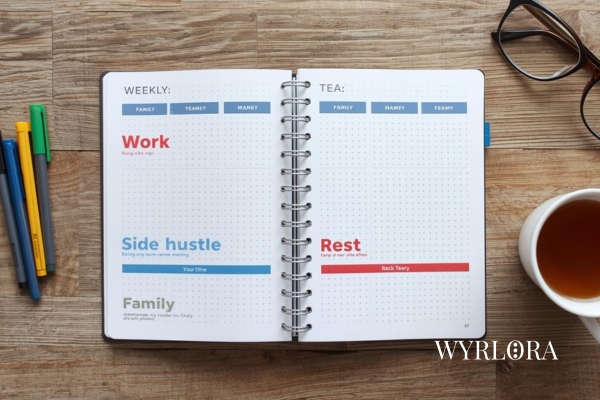
Grab a weekly calendar and block:
Sleep – aim for what your body realistically needs.
Work hours + commute.
Family/relationship anchors – dinners, kids’ activities, date night, church.
Rest – at least half a day where you don’t touch the side hustle or the day job.
Now look at what’s left. You might see:
Two early mornings
One evening
A chunk on Saturday afternoon
That might only be 5–8 hours a week. That’s okay. The power is in consistency, not drama.
Step 3: Choose a Side Hustle That Fits the Gaps
At this stage, avoid ideas that require:
Constant real-time availability
Late-night shifts when you’re already exhausted
Heavy physical labour your body can’t sustain
Instead, prioritise side hustles that:
Can be done in small blocks (1–2 hours)
Allow asynchronous work (you can respond when you’re free)
Use skills you already have
Good fits for full-time workers in midlife include:
Virtual assisting or online admin for one or two clients
Freelance writing, editing or proofreading
Tutoring or mentoring (evenings or Saturdays)
Simple digital products (printables, templates, resources)
Local services that can be booked in advance (organising, light garden care, pet minding)
Step 4: A Gentle 12-Week Launch Plan
Here’s a realistic way to start a side hustle while working full-time, in about three months.
Weeks 1–2: Clarify and Commit
Finalise one side hustle idea based on your skills and available time.
Write a simple description of who you help and what problem you solve.
Decide on your time boundaries (which blocks each week you’ll use).
Talk the plan through with your spouse or a trusted friend.
Weeks 3–4: Create a Tiny First Offer
Keep it simple. Examples:
“I’ll manage your inbox and calendar for 5 hours a week for 3 months.”
“I’m offering 4 x 60-minute tutoring sessions for high-school English.”
“I’ll set up and organise one room in your home over two visits.”
Set a starting price that feels slightly uncomfortable but not ridiculous. You can adjust later.
Tell people:
Share with friends, church, school or local groups.
Post a simple message: who you help, what you do, how to contact you.
Aim for 1–3 clients, not a flood.
Weeks 5–8: Serve, Learn, Adjust
As you deliver your first projects:
Track how long tasks actually take.
Notice what drains you and what energises you.
Ask for feedback or a short testimonial.
Adjust:
Your offer (narrow or broaden as needed).
Your pricing (if you severely under-charged, note it for next time).
Your schedule (protect rest if you’re starting to fray).
Weeks 9–12: Systemise and Decide
You don’t need a fancy system. For now:
Use a simple spreadsheet or notebook to track income and expenses.
Block recurring times in your calendar for side hustle work.
Create 2–3 basic email templates (welcome, invoice, follow-up).
At the end of 12 weeks, ask:
Do I like this enough to continue?
Is it bringing in enough for the effort?
What would make it more sustainable?
Then decide: continue, tweak, or bless and release it.
Step 5: Guardrails for Your Health, Marriage and Faith
Side hustles can become idols quickly if we’re not careful. Build guardrails:
Health Guardrails
Minimum hours of sleep per night (and stick to it).
Movement you enjoy (walks, stretching, light strength work).
Real food at regular times (no living on coffee and toast).
If your health crashes, your side hustle will too.
Marriage and Family Guardrails
A weekly “no hustle” night with your significant other or family.
Check-ins: “How is this side hustle impacting you?” and “What do you need from me?”
Clear communication about busy seasons and when they’ll end.
Faith & Emotional Guardrails
Keep a simple spiritual rhythm: a quiet time, prayer, worship, journalling — whatever helps you stay tethered.
Watch for warning signs: irritability, cynicism, constant comparison, feeling like your worth is tied to numbers.
Return often to your true source of security: not your job, not your side hustle, but God’s steady care and your own choices to steward what you have.
Step 6: When (and Whether) to Go Full-Time
Not every side hustle should become a full-time job. Some are meant to:
Pay down specific debts.
Fund micro-trips or grandkid adventures.
Build a buffer so you can reduce hours at your main job.
If you are considering going full-time, some common checkpoints:
Your side hustle has been bringing in consistent income for at least 6–12 months.
You have 3–12 months of essential expenses saved, depending on your risk tolerance and responsibilities.
You’ve talked honestly with your spouse or key family members.
You have a clear, written plan for what you’ll do in the first 6 months after leaving your job.
Again, this is not personalised financial advice. It’s an invitation to walk wisely.
Build With Wisdom, Not Panic
Starting a side hustle while working full-time in your 40s isn’t about proving you can grind as hard as a 22-year-old.
It’s about building freedom on purpose:
Freedom to say no to toxic workplaces.
Freedom to reduce hours later.
Freedom to give, serve and rest without constant financial panic.
If you take nothing else from this post, let it be this:
You are allowed to build extra income slowly, quietly, and in a way that honours your season and your soul.
Take your time. Protect your people. Let your side hustle serve your life — not the other way round.
Until we chat again,
Blessing & hugs to you my dear friend,
Dianne xx