When Truth Hurts but Healing Begins
Why grace, secrets and redemption sit at the heart of the stories I love to write.
There is a particular kind of story I cannot leave alone.
It is the one where something has been hidden too long.
A family has carried a silence. A town has protected a version of events. A woman has learned to keep functioning because stopping would mean feeling everything she has carefully packed away.
And then, slowly, truth begins to rise.
Not loudly at first. Just enough to disturb the surface.
Why secrets are never just secrets
In fiction, a secret can be a clever plot device. It can create tension, suspicion, curiosity and that delicious little feeling of needing one more chapter before bed.
But the kind of secrets that interest me most are not there only to surprise the reader.
They matter because they have cost someone something.
A secret can shape a childhood. It can bend a family around itself. It can make people perform peace while quietly living with fracture. It can teach a woman to be capable because being needy never felt safe.
That is why stories with hidden truths can be so emotionally powerful. They are not only asking, “What happened?”
They are asking, “Who was changed because no one named it?”
Grace does not mean pretending
One of the reasons I love Christian fiction is that it gives pain somewhere hopeful to go.
Not Easy. But Hopeful.
There is a difference.
Grace in a story does not mean pretending the harm was small. It does not mean rushing forgiveness so everyone can feel comfortable again. It does not mean smoothing over what should have been faced.
Real grace has more courage than that.
Grace is able to stand in the same room as truth.
It can look honestly at what happened and still believe healing is possible. It can grieve what was lost without surrendering the future to it. It can make space for repentance, restoration and mercy without denying the weight of what went wrong.
That is the kind of grace I find compelling in fiction.
Redemption is rarely tidy
I think readers often recognise themselves in redemption stories because real life is not tidy either.
We know what it is to regret something. To wish a conversation had gone differently. To look back and see where fear made us smaller than we wanted to be. To realise that silence, even well-dressed silence, can still do harm.
Good fiction lets characters face those things without making despair the final word.
That matters.
A redemption arc is not powerful because everything is suddenly fixed. It is powerful because someone begins to turn toward the truth. Someone takes responsibility. Someone allows light into a place that has been closed too long.
Sometimes that change is dramatic.
More often, it begins quietly.
A conversation. A document. A memory. A confession. A decision not to turn away this time.
The kind of hope I want inside WYRLORA stories
Inside The WYRLORA Chronicles, I am drawn to stories where faith is present in the real places — not only in pretty moments, but in strained conversations, family fractures, grief, moral courage and the long work of healing.
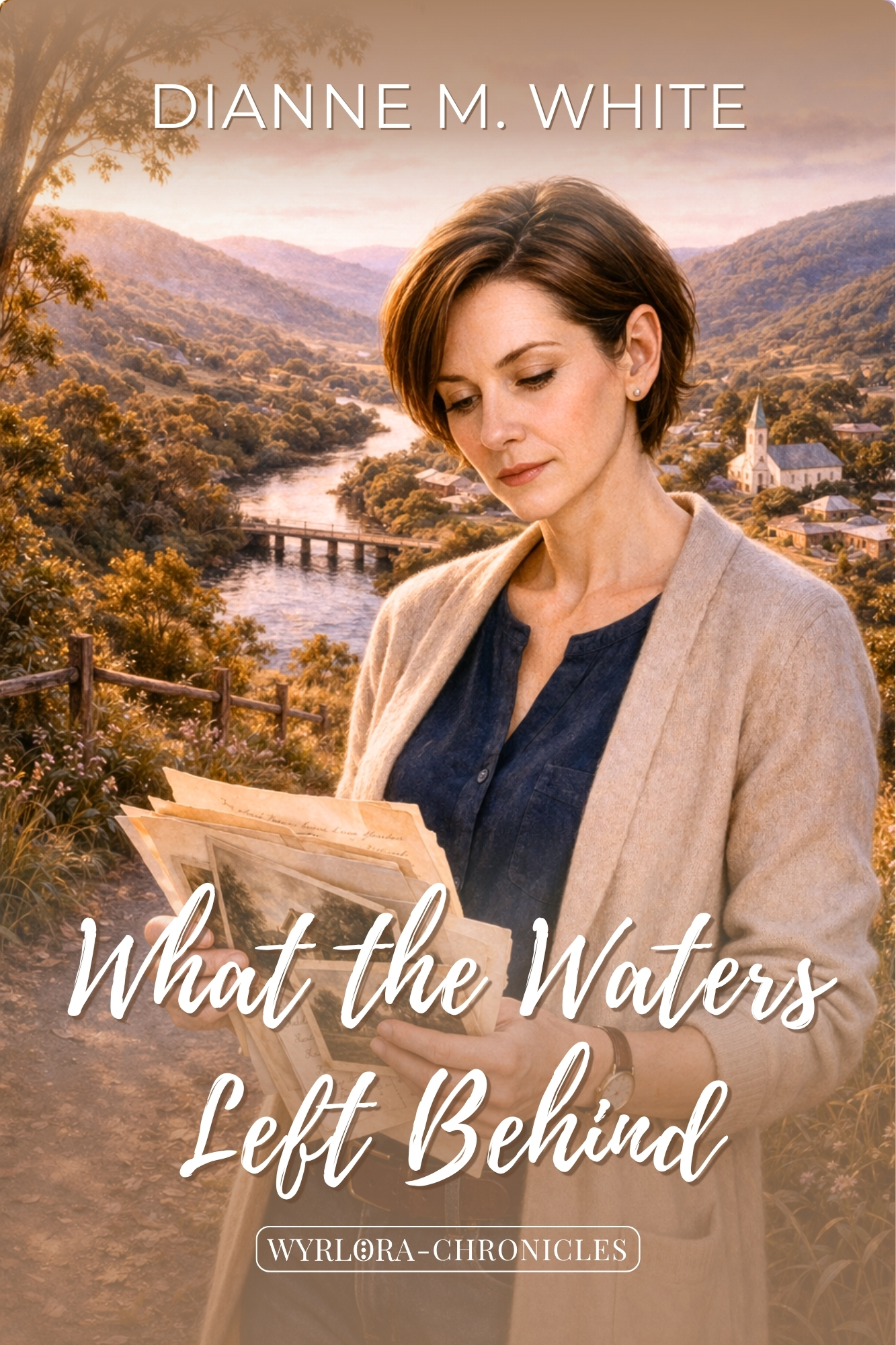
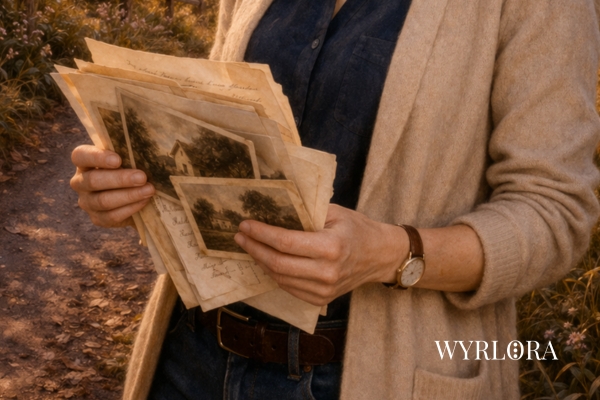
In What The Waters Left Behind, that means old records matter. Water-damaged archives matter. A memorial hall matters. A mother’s silence matters. A pastor’s humility matters. A steady man’s patience matters. A woman’s hidden wounds matter.
Because people matter. And if people matter, truth matters too.
But truth alone can feel like a blade if there is no hope beyond it. That is where grace enters the story. Not as a decorative spiritual word, but as the possibility that even after damage, even after silence, even after years of carrying what should never have been carried alone, healing can begin.
Why readers still need stories like this
We live in a world that often wants quick answers.
Fiction gives us room to sit with slower ones.
It lets us watch a character become brave by inches. It lets us feel the ache of truth without being abandoned there. It reminds us that people can be complicated without being disposable, and wounded without being beyond hope.
That is why I keep coming back to stories of grace, secrets and redemption.
Because sometimes the most powerful moment in a book is not when everything is solved.
Sometimes it is when someone finally tells the truth and discovers they are still held by grace.
If that is the kind of story you love too, I would be honoured to welcome you into Brynvara.
Come and begin with What The Waters Left Behind, Book One in The Brynvara Series.
With warmth,
Dianne xx